

The Romería del Rocío pilgrimage takes place from May 22nd to 25th.
May 25th is also celebrated as Africa Day and International Tap Dance Day.
Recommended music videos for initiation to classical music


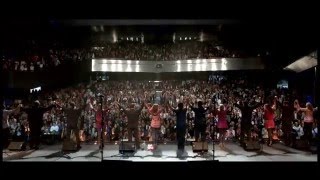
The Salve Rociera is the hymn sung to the Virgin of El Rocío at the Sanctuary of El Rocío in Almonte (Huelva). El Rocío , as the pilgrimage is traditionally called, is a religious and folkloric phenomenon that draws over a million people to the hermitage during the celebrations in May or June (depending on the date of Pentecost ). It was precisely for the El Rocío Pilgrimage that Manuel Pareja-Obregón composed the Salve Rociera , also known as the Salve to the Virgin of El Rocío or the Salve del Olé , with lyrics by Rafael de León. Today we present it in a version by Siempre Así , a Sevillian folk music group, accompanied by the Royal Seville Symphony Orchestra , all under the direction of the English maestro John Richard Durant.
Manuel Pareja-Obregón (1933-1995) was a Sevillian musician and composer, whose compositions include Sevillanas and Fandangos from Huelva . He played a key role in introducing Andalusian folk music to mainstream culture, pioneering orchestral arrangements where previously only guitar and castanets had been used. He composed approximately 3,000 works for a large number of famous Spanish stage artists. In 1987, he founded a school for drummers in the village of El Rocío, later known as the Tamborileros de Nuestra Señora del Rocío (Drummers of Our Lady of El Rocío) . He died in Seville at the age of 62 from leukemia, which had kept him hospitalized for the last two months of his life. He was cremated, and his ashes were scattered in the village of El Rocío .
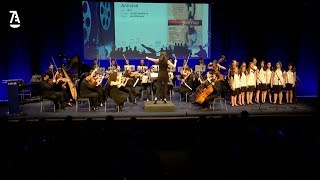
Africa Day , or African Liberation Day , is celebrated on May 25th since 1963. Originally designated as African Freedom Day and celebrated on April 15th to symbolize the progress of liberation movements and the determination to break free from foreign domination and exploitation, the date was changed to May 25th in 1963. This change occurred after the formation of the OAU (Organization of African Unity) in Addis Ababa, Ethiopia , during a meeting organized by Emperor Haile Selassie . At this meeting, leaders of thirty African nations, now mostly independent, agreed to promote decolonization and improve living standards in member states. African Liberation Day (ALD), or Africa Day , reflects a more unified and organized approach to the struggle for the continent's liberation and independence. Furthermore, ALD ( African Liberation Day) has served as a platform for global solidarity against imperialism, recognizing and supporting the struggles of other oppressed peoples worldwide.
John Williams (1932) is an American composer, conductor, pianist, and trombonist, considered one of the most prolific film score composers in history. He has composed some of the most famous and recognizable film scores of all time, including those for Star Wars, Harry Potter, Jaws, Catch Me If You Can, E.T., Superman, Indiana Jones, Jurassic Park, Schindler's List, Home Alone, and others. He has also composed music for various Olympic Games , numerous television series, newsreels , and several concert works . He has won the Academy Award five times and has received 52 nominations, making him the second most nominated artist for the highest honor in film, after Walt Disney .
" Dry Your Tears, Africa " is a song from the soundtrack of the film Amistad , directed by Steven Spielberg and released in 1997. The plot is based on the true story of a group of African slaves who mutinied on their journey from Sierra Leone to Cuba aboard the ship La Amistad near Puerto Rico in July 1839. The film spans from that date until 1841, when they are declared free and given the option of staying in the USA as free citizens or returning to their country.
Swing music , also known as swing jazz or simply swing , is a style of jazz that originated in the United States in the late 1920s. Swing uses a rhythm section consisting of piano, double bass, and drums; brass instruments such as trumpets and trombones; woodwind instruments such as saxophones and clarinets; and, very occasionally, string instruments such as violin or guitar. It is primarily based on medium to fast tempos and generally features melodic riffs (short, repetitive phrases). The characteristic ensemble of the style was the Big Band , with the soloist playing a crucial role. Notable figures in this style include Glenn Miller, Fletcher Henderson, Benny Goodman, Duke Ellington , and Count Basie .
Characteristics of swing . The drums are the only instrument with a purely rhythmic function, which gives them special relevance as the driving force of the entire band; they enhance melodic themes by establishing an invariable structure for the pieces and rigidly fixing the place and duration of improvisations; they use the riff as a tension resource, and consolidate the use of the higher registers of the instruments, in preference to the lower ones.
Harry Warren (1893–1981) was an American composer and lyricist. Warren was the first major film songwriter to focus primarily on film. He was nominated eleven times for the Academy Award for Best Original Song, winning three (for "Lullaby of Broadway," "You'll Never Know," and "On the Atchison, Topeka and the Santa Fe "). He wrote the lyrics for the first commercially successful film musical, 42nd Street , directed and choreographed by Busby Berkeley , with whom he collaborated on many other musicals. Over a career spanning four decades, Warren composed more than 800 songs and was one of the most prolific film composers.
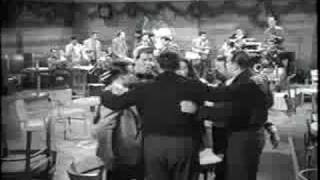
"Chattanooga Choo Choo" is one of the most iconic songs of the American swing era, composed by Harry Warren with lyrics by Mack Gordon . After a brief introduction that imitates train sounds, the song describes an imaginary train journey from New York to Chattanooga, Tennessee , reflecting the romanticism associated with train travel during the first half of the 20th century , with the " Choo Choo " of the title mimicking the typical sound of steam locomotives. It's worth noting that this was the first song in history to receive a Gold Record (awarded by RCA in 1942 for selling 1 million copies) and was also one of the biggest hits of the swing era and a key piece in Glenn Miller 's repertoire. Its upbeat style, the vocal section of the Modernaires , and the distinctive big band sound all contributed to its enormous popularity.
Today we offer the video of the film " Sun Valley Serenade " (1941), with the Glenn Miller Orchestra, Nicholas Brothers, Tex Beneke, Paula Kelly and The Modernaires in this swing enriched with the final tap choreography.
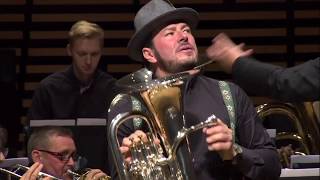
The euphonium is a brass instrument that plays the baritone-tenor role in wind orchestras or concert bands ; it is also known as the euphonium (“sweet sound”), which highlights the character of its unique sound, making it suitable for the lyrical parts corresponding to that range. The euphonium fulfills the role of the cello in an orchestra in a concert band .
The polka is a folk dance that originated in Bohemia (present-day Czech Republic ) around 1830. It began to gain popularity in Prague from 1835 onwards, then spread to Vienna and Paris , and from there expanded to the rest of the world, taking on its own forms in the Americas , especially in Mexico, Texas, Colombia, Chile, and Argentina . Its music is written in 2/4 time with a fast tempo, and it is danced with side steps and quick turns.
Today we present the Baritone Lechner Polka, written by Wolfgang Sorger and performed by euphonium player Tormod Flaten, accompanied by the Baritone Lechner Brass Band.
Recommended classical music videos
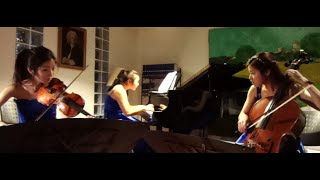
Johannes Brahms (1833-1897), born in Vienna where he spent most of his life, was the most conservative composer of Romanticism , in contrast to the progressive current led by Liszt and Wagner . His music is firmly rooted in the compositional structures and techniques of the Classical masters, and its formal structures faithfully follow Classical patterns, although it incorporates elements of Romanticism and popular music. A perfectionist by nature, he wrote for piano, chamber ensembles, symphony orchestra, solo voices, and choir. It was Hans von Bülow who coined the term "the three Bs," referring to Bach , Beethoven , and Brahms as the three main pillars of music history .
Catalogue of Brahms' works . His works are classified by their Opus number (from the Latin opus 'work'; op. abbreviation) which is a term used in music to catalogue the works of most composers since the 17th century .
Piano Trio . During the Baroque period , the trio typically consisted of two high-pitched melodic instruments and a basso continuo played by a low-pitched melodic instrument, along with a harmonic instrument such as a harpsichord. In the Classical period , the piano trio , consisting of violin, cello, and piano, gained clearer favor among composers. Haydn stabilized this formation while simultaneously undergoing a profound transformation, adding different nuances and contrasts to the ensemble, and sometimes incorporating voices or wind instruments. In Mozart 's hands, the cello went from being a secondary instrument that mirrored the left hand of the piano to becoming a vital and active participant.
Johannes Brahms's Trio No. 1 in B major, Op. 8, for piano, violin, and cello, was composed and published in 1854. During the summer of 1889, Brahms extensively revised the work and published a new version in 1891 under the same opus number, but with the note "new edition"; this second version is radically different from the first. Brahms began some minor adjustments to the score, but ended up changing entire sections of almost every movement. The trio was thus structured in four movements: I (0'16") ALLEGRO CON BRIO; II (10'04") SCHERZO; III (16'26") ADAGIO; IV (23'52") ALLEGRO.
Today's version is presented by the Trinity Trio with Tina Kim on piano, Stella Kim on violin and Sally Kim on cello.
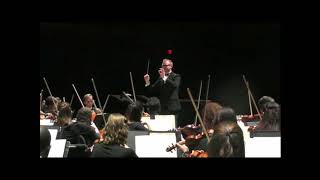
Joaquín Turina (1882-1949) was a pianist, composer, and conductor born in Seville , and author of some of the most important works of Spanish Impressionism alongside Falla and Albéniz . From childhood, considered a prodigy, he improvised virtuously on the accordion. Although he began his piano studies concurrently with his secondary education, in 1903 his parents died, and he moved to Paris where he studied composition with Vincent D'Indy, supporting himself with his piano performances. In 1913, with the outbreak of World War I, he returned to Madrid , where he settled permanently. He was appointed a full member of the Royal Academy of Fine Arts of San Fernando , a favorite son of Seville , and received other important awards such as the Grand Cross of Alfonso X the Wise .
A symphonic poem is a free-form orchestral work, generally based on a literary text, whose purpose is to evoke sensations or feelings through a pre-established narrative. It typically consists of a single movement and is written for orchestra, although it can also be for piano or small instrumental ensembles. Franz Liszt is considered the father of the symphonic poem, having composed as many as 13 works in this genre, which quickly became widespread during the Romantic period.
The Rocío Procession , which we present today, is a symphonic poem composed by Joaquín Turina in 1912 in Paris . The piece premiered on March 30, 1913, at the Teatro Real in Madrid , conducted by Enrique Fernández Arbós , the work's dedicatee, with the Madrid Symphony Orchestra leading the performance. A piano version was also created by the composer between June 6 and 10, 1913. This symphonic poem is inspired by the religious tradition that takes place every year in the village of El Rocío ( Almonte, Huelva ), in which the image of the Virgin is carried in procession through the village as part of the Rocío Pilgrimage . The composer successfully conveys the festive and devotional atmosphere of the procession, from the joy of its spontaneous dances to the religious fervor, using a rich orchestral palette of bright and sumptuous colors.
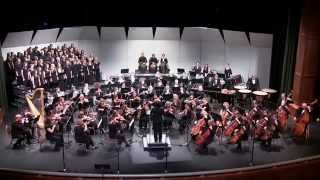
Marshall McDonald is a pianist, arranger, and composer who has produced several albums and films, and has two symphonies to his credit. He has also produced numerous scores and piano books. He graduated from the University of Utah in 2003 with a bachelor's degree in music and communications and later earned a master's degree in public administration. In addition to his work as a composer, he also teaches music.
Steven Sharp Nelson is an American composer and cellist who also studied and graduated from the University of Utah .
Africa is a work for Choir and Symphony Orchestra with 8 percussionists composed by Marshall McDonald and Steven Sharp Nelson and based on African themes; it is a tribute to the African continent.
The musical direction of the video we are offering today is by the Chinese maestro Xun Sun.
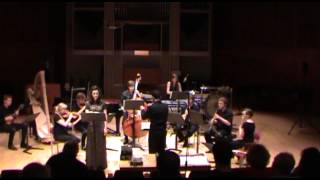
Unsuk Chin ( Seoul , July 14, 1961) is a South Korean composer of European classical music, who lives in Berlin . She studied composition at Seoul National University with Sukhi Kang , then in Hamburg with György Ligeti . Ligeti 's teaching has contributed significantly to the definition of her own style, more so than Korean influence. While still a student of Ligeti , she received the Gaudeamus International Competition for Composers in 1985. She employs both traditional and electronic instruments in her works. In her own words, "virtuosity fascinates [her]," which explains the daunting difficulty of her Violin Concerto , for which she won a Grawemeyer Prize in 2004, and her Double Concerto for Piano, Percussion, and Ensemble from 2002.
Her best-known piece, Akrostichon-Wortspiel , for soprano and instrumental ensemble (1991/1993), is an ideal illustration of her style, characterized by highly exaggerated instrumental and vocal refinement, yet simultaneously playful and accessible. The piece evokes the world of childhood through a text composed entirely of onomatopoeia.
Acrostic-Wordplay is a work for solo soprano and instrumental ensemble, consisting of seven “scenes” or movements , whose texts are derived—in a fragmented and transformed manner—from two stories: Michael Ende ’s The Neverending Story and Lewis Carroll ’s Alice Through the Looking-Glass . Chin “deconstructs” these texts—sometimes by randomly mixing consonants and vowels, other times by writing them backward—so that the literary meaning disappears. What remains is a “symbolic significance,” a play of sounds, rhythms, and resonances. Each of the seven movements revolves around a controlled tonal center ; But each of them musically explores their own resources, sought to express emotional states, atmospheres, different situations - from the luminous to the grotesque, where some instruments within the ensemble require tunings "between a quarter and a sixth of a tone" above the tonal center to achieve subtle microtonal nuances and where the soprano, whose voice is treated as just another instrument, sometimes fluctuates between these tuning systems.
Acrostic-Wordplay was Chin 's international breakthrough work. Dating from the early 1990s, it marked the beginning of her recognition outside of Korea . Following this work, her catalog expanded to include orchestral pieces, concertos, and a highly personal style that blends post-tonal tradition, modernism, timbral refinement, and a playful exploration of voice and language—elements that would come to define her artistic work. Her vocal treatment—abstract and experimental—has contributed to her reputation as an innovative composer, capable of reinventing the relationship between language, singing, and instrument.
Today it is presented to us by soprano Ana Beard-Fernandez with The Chimera Ensemble , all led by maestro Azlee Babar .
Recommended music videos for all tastes

Sevillanas, formerly called seguidillas sevillanas , are a type of music and dance typical of Andalusia , especially in Seville, Huelva, and Cádiz . They are danced in couples and are festive in nature. The music originates from the seguidilla manchega , from which it inherits its structure; however, due to contact with other Andalusian musical styles, its sound has become more flamenco-influenced. The dance, which was added later, takes its movements from the bolero school . Sevillanas are not a flamenco style in the strict sense, because the dance is choreographed and the lyrics have been simplified to accompany the dance, although they do incorporate various aesthetic elements of flamenco . Sevillanas are always performed in sets of four and consist of a simple four-line seguidilla and a three-line refrain.
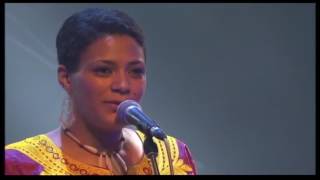
Sona Jobarteh (London, October 17, 1983) is a Gambian-English composer, singer, and instrumentalist. Hailing from one of the main griot lines in West Africa (a griot or jeli is a storyteller), she has been studying the kora since the age of three with her brother, Tunde Jegede , and her father , Sanjally Jobarteh . She is the first woman in her family to play the instrument in public. She studied at the Royal College of Music , where she played cello, piano, and harpsichord, and shortly afterward moved to the Purcell School of Music to study composition. During the same period, she participated in several orchestral groups, such as the Irish Chamber Orchestra , the Royal Philharmonic Orchestra , and the BBC Symphony Orchestra .
The kora is an African instrument, a hybrid of harp and lute, constructed by transforming the sound produced by a leather covering that forms the resonating chamber. A notched bridge is added to transmit the vibration of the strings attached to the neck. The kora 's sound is reminiscent of a harp, although when played traditionally, it more closely resembles the style of flamenco guitars. The player uses only the thumb and forefinger of both hands to pluck the strings, while the remaining fingers grip the neck on either side of the strings to hold it steady. Traditional koras have 21 strings, 11 played with the left hand and 10 with the right; however, modern koras can be found with up to four additional bass strings.

Herbert Grönemeyer (Göttingen, April 12, 1956) is a German musician, singer, and actor. Since 1984, all of Grönemeyer 's studio albums have reached number one on the German charts. In 1998, his wife Anna and his brother Wilhelm both died of cancer just three days apart, a loss that deeply affected him. His grief is reflected in the songs on his 2002 album, Mensch , which has sold 3.7 million copies, making it the best-selling album in German music history. As an actor, Grönemeyer has also enjoyed considerable success, appearing in numerous German films, most notably Wolfgang Petersen 's Das Boot , which achieved extraordinary international success.

Nazia Hassan (1965–2000) was a Pakistani singer, songwriter, lawyer, political analyst, and philanthropist. Known as the " Queen of Pop of South Asia ," she is considered one of the most influential musical figures in South Asian history and the subcontinent 's first pop star . From the 1980s onward, as part of the duo Nazia & Zoheb , she and her brother Zoheb Hassan sold over 65 million records worldwide. Born in Karachi, Pakistan , she was raised between Karachi and London , where she studied alongside her brother Zoheb Hassan. There, they were directly influenced by the maestro Suhail Sana , who produced their musical show Saray Dost Hamaray (" Everyone Is Our Friend" ). Years later, on March 22, 2002, he received posthumous recognition for his contributions and achievements from the Government of Pakistan , which awarded him the highest prize for civic achievement and pride in the area of culture, art, and music.
Recommended peculiar videos
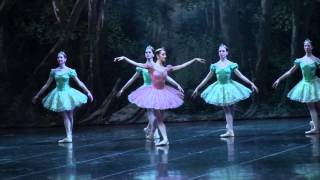
Ludwig Minkus (1826-1917) was an Austrian violinist and composer of ballet music. He studied at the Vienna Conservatory ; during this time, while composing ballet music, he also performed as a violin soloist and founded an orchestra that would rival that of the young Johann Strauss . In 1846, Minkus moved to Paris , and that same year the ballet Paquita premiered, with music by Édouard Deldevez, assisted by Minkus . Finally, in 1847, the St. Petersburg Ballet staged a version crediting Minkus for the music, and in 1881, with choreography by Marius Petipa , he created new pieces (a Pas de trois and the Grand Pas de deux ) for the new version of Paquita . In 1853, already settled in Russia , he worked as an orchestra conductor; in 1861, he joined the Bolshoi Theatre Orchestra as a violinist. A year later, he became director, and two years after that, he was appointed composer for the Bolshoi Ballet . Although permanently settled in Russia , he maintained his ties with Paris and in 1866 traveled to the French capital to compose the new ballet La Source .
Don Quixote is a ballet with a prologue and four acts by Ludwig Minkus and choreography and libretto by Marius Petipa , which would be premiered in 1869 at the Bolshoi Theatre , with enormous success from both critics and the public; a ballet whose plot is based on the novel by Miguel de Cervantes and in particular on the "wedding of Camacho" ( Gamache in the ballet), an episode narrated in chapter XIX of the second part, in which the romance between the barber Basilio and the young Quiteria (Kitri in the ballet) is recounted.
Today we offer a selection of it with the stellar performance of Nicoletta Manni.
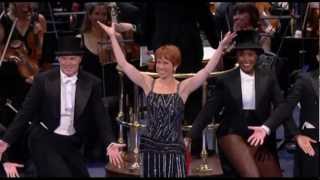
Jerry Herman ( New York City , July 10, 1931 – Miami, Florida , December 26, 2019) was an American composer and lyricist, best known for his work in Broadway musical theater. He composed the scores for the hit Broadway musicals Hello, Dolly!, Mame, and La Cage aux Folles . He was nominated for the Tony Award five times, winning twice, for Hello, Dolly! and La Cage aux Folles .
Tap dance , also called tap , is an American dance style in which the feet move rhythmically to a musical stamping sound. It originated from the fusion of clog dances from Ireland , Northern England , and Scotland , combined with dances practiced by African Americans. In fact, in 1739, Black slaves were prohibited from using percussion instruments ; this motivated them to create rhythms with their feet and hands. Dancers would gather to compete and demonstrate their best skills and movements. In this way, a new dance was born: American tap . Dancers relaxed the rigid Irish postures, used their arms and shoulders to emphasize the steps, and added new ones, as improvisation was paramount in this dance.
Today we offer the song "Tap Your Troubles Away" from the musical "Mack & Mabel".
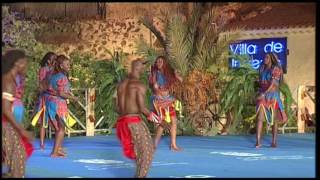
The artists of the Jammu Folkloric Ballet transport us to the heart of Africa , to its sounds, rhythms, and colors. This folkloric ballet was founded in Dakar in 2008, directed by As Ndiaye , merging two ideas: to create a stable folklore group and, at the same time, a music and dance school. Based at the Yoff Cultural Center in Dakar 's maritime district, the ballet features young musicians and dancers from all of Senegal 's ethnic groups. Their performances showcase traditional Senegalese dances as well as choreographies incorporating elements of contemporary dance. Their impressive dances combine energetic movements with spectacular acrobatics, based on the Mbalax rhythm, which is produced by the Sabar drums , used for centuries by the Wolof people of Senegal .
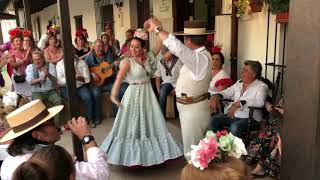
The relationship between Sevillanas and the Romería del Rocío is profound and steeped in tradition. Although Sevillanas are danced in many festive contexts throughout Andalusia , in El Rocío they take on a unique character and style, as a specific type of Sevillanas called Rocío Sevillanas is danced there. These differ from the Sevillanas of the fair due to their religious and devotional themes, with lyrics that speak of the Virgin of El Rocío , the pilgrimage, the journeys, the brotherhoods, and faith, all within a more tranquil and sentimental rhythm. However, festive Sevillanas also exist within the Rocío context. Furthermore, their musical accompaniment includes a tambourine, Rocío flutes, and choirs, in addition to guitars.
Along the pilgrimage route and in the village, Sevillanas are danced on horseback, on foot, at the brotherhoods' stops, or during gatherings as a social dance that unites pilgrims and devotees, performed both spontaneously and at brotherhood events. Also noteworthy are the Rocío choirs , which have played a fundamental role in popularizing Rocío Sevillanas since the mid- 20th century . Many of the best-known groups have created a repertoire that is now considered an essential part of the Rocío tradition .
Recommended music videos for children





Various Wikipedia articles and relevant information on Artificial Intelligence were used to prepare these texts.
The texts of Videomusicalis are written in Basque, Spanish and English.