

Summer begins on June 21st
Recommended music videos for initiation to classical music


Astor Piazzolla (1921–1992) was born in Mar del Plata , Argentina . At the age of three, he moved with his family to New York , and at thirteen, he met Carlos Gardel . Upon returning to Argentina , he studied with Ginastera for six years while frequenting the Café Germinal, where tango music was a daily staple. He played in various ensembles, where purists considered his innovations to be the "murder of tango." Feeling somewhat pessimistic, he moved to Paris , where he met Nadia Boulanger , who helped him believe in himself and in the potential fusion of tango with classical music . He returned to Buenos Aires so active that in 1973 he suffered a heart attack. Despite this, he continued composing and recording until 1990, when he suffered a thrombosis in Paris from which he did not recover.
The Four Seasons of Buenos Aires, also known as Estaciones Porteñas , is a set of four tango compositions written by Astor Piazzolla . He originally conceived and treated them as separate pieces rather than a suite, and over time they were released on different albums. However, Piazzolla did occasionally perform them together. The pieces were written for a quintet consisting of violin, piano, electric guitar, double bass, and bandoneon. The adjective "porteño," the demonym for Buenos Aires, is used by Piazzolla to convey his impression of the seasons in Buenos Aires .
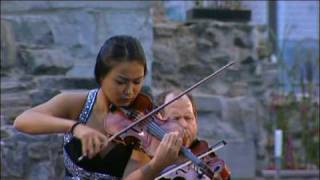
Today we offer an arrangement of Verano Porteño , with several explicit references to Vivaldi 's Summer , in a version for string chamber orchestra led by Korean violinist Soyoung Yoon as the ensemble's soloist.
Juan Crisóstomo de Arriaga (1806-1826), known by many as the Basque Mozart , was born in Bilbao . His father, Juan Simón , came from Errigoiti , a town near Gernika , as did his mother, Maria Rosa . His father, an organist in Berriatua , Bizkaia , moved to Bilbao to pursue his business interests, which prospered, allowing him to support Juan Crisóstomo 's education in Paris , where he died ten days before his twentieth birthday. The musical legacy that has been preserved consists of three string quartets, the octet Nada y mucho , written at age 11, Overture No. 1 , the Symphony in D, several arias and cantatas as well as religious music such as O Salutaris hostia and Stabat Mater , in addition to an opera, Los esclavos felices , written at age thirteen, of which only its overture is preserved, which we offer today.
An overture is the instrumental introduction to an opera or other dramatic work, musical or otherwise, although some independent instrumental compositions from the 19th and 20th centuries were also called overtures by their composers. The earliest operas, dating from the beginning of the 17th century , did not have overtures but did have an introduction performed by vocalists that summarized the action to follow. Instrumental introductions began to be used regularly in the mid- 17th century, and the German composer Christoph Willibald Gluck was one of the first to use material from his operas for overtures. In this way, they established the emotional tone of the opera that followed.
The Overture to The Happy Slaves is the Introduction to the opera of the same name, composed by Arriaga when he was only 13 years old. The work follows a scheme close to sonata form, with a slow, brief, and solemn Introduction (0:08), followed by (1:32) a fast section with two contrasting themes , a concise development , and a clear recapitulation . The influence of Haydn and Mozart is strongly evident in its formal clarity, the balance between sections, and the treatment of the orchestra.
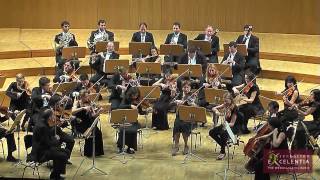
Today we offer it in a version by the Santa Cecilia Classical Orchestra conducted by its concertmaster Florian Donderer .

Francisco Repilado Muñoz (1907–2003), known artistically as Compay Segundo , was a Cuban musician and composer with a long and distinguished international career. He became a popular composer and performer, well-known among lovers of Cuban music. He began playing the guitar, the Cuban tres, the clarinet, the bongos, and also the congas. He created the melody "Chan-chan" and invented the armónico, a seven-string hybrid instrument combining elements of the Spanish guitar and the Cuban tres.
Chan Chan is a Cuban son song composed by Compay Segundo , which tells the story of two characters, Juanica and Chan Chan . Written in 1984, the song first mentions four towns in eastern Cuba : Alto Cedro, Marcané, Cueto, and Mayarí , all belonging to the province of Holguín . It then recounts the story of Juanica and Chan Chan , a woman and a man who were building a house and went to the sea to collect sand. While Juanica was shaking the sieve (sand sifter), the swaying of her body as she did so made Chan Chan feel embarrassed. Apparently, this story was a popular farming legend that Compay often heard as a child.
Today we offer an arrangement for mixed voice choir performed by the Entrevoces Chamber Choir of Havana .
Leroy Anderson (1908-1975) was an American composer of short orchestral pieces of light music, many of which were premiered by the Boston Pops Orchestra under the direction of Arthur Fiedler . John Williams described him as "one of the greatest American masters of light orchestral music." Anderson received his first piano lessons from his mother, who was a church organist; he continued studying piano at the New England Conservatory of Music and Harvard University, graduating with a Bachelor of Fine Arts degree, cum laude, in 1929. He worked as an organist, choir director, and band director, making numerous arrangements for dance bands in Boston .
“Bugler’s Holiday” is one of the most famous and recognizable pieces by composer Leroy Anderson (1908–1975), composed in 1954 for three-part trumpet accompaniment by orchestra, in this case a brass band . The work has a bright, festive, and playful character, although it is inspired by military bugle calls, treated in a cheerful and virtuosic manner, combining rhythmic precision with highly melodic passages and musical humor, typical of Anderson ’s style. The trumpets take center stage, while the other instruments provide light and understated accompaniment to the soloists. As in his other works, Leroy Anderson demonstrates with this piece his talent for creating accessible, elegant, and highly effective music for audiences.
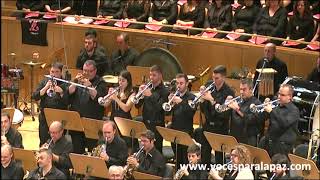
Today we are attending the version offered by the Solidarity Musicians Band conducted by maestro José Rafael Pascual Vilaplana
Recommended classical music videos
Antonio Vivaldi (1678-1741) was an Italian priest, violinist, and composer known as the Red Priest (“il prete rosso”). Born in Venice , he learned to play the violin from his father as a child. At the age of 15, he entered the seminary , and after his ordination, he was unable to fulfill his religious duties due to health problems. Consequently, he was appointed violin teacher at an orphanage, where he taught both theory and instrumental instruction. At 40, he was appointed Maestro di Cappella in Mantua , where he composed his famous Four Seasons . From there, he moved to Milan , then to Rome , later back to Venice , and finally to Vienna , where he died. Throughout his life, he composed nearly 800 works, half of which were concertos, 40 operas, 60 religious works, and numerous sonatas.
The Four Seasons is a set of four concertos, one for each season, for solo violin and string orchestra; each concerto is divided into three movements (I Fast, II Slow, III Fast); it is Vivaldi 's most highly regarded work and one of the most popular in the history of music . When the work was first published, he included an explanatory booklet in which he described in detail the development and meaning of the music, in the style of what centuries later would be called program music or descriptive music.
Concerto No. 2, Summer is structured in three movements: I (0'10") ALLEGRO NON MOLTO "Under the harsh season, kindled by the sun, man and flock languish, and the pine tree burns. The cuckoo lets out its voice, and when they understand it, the wood pigeon and the goldfinch sing..." .-. II (6'05") ADAGIO E PIANO-PRESTO E FORTE "Fear of lightning and fierce thunder robs their languid limbs of rest, and the furious swarm of flies and buzzards!" .-. III (8'10") PRESTO "Ah, their fears are true! The sky thunders and flashes, and with hail, it snaps the heads of the ears of corn and disturbs the grains."
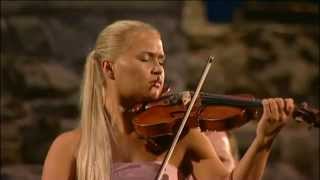
Today it is offered to us by the Norwegian violinist Mari Samuelsen .
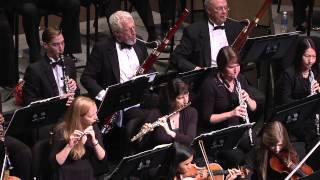
Modest Mussorgsky (1839-1881) was a Russian composer who strongly advocated and practiced the goals of The Mighty Five ( César Cui, Mily Balakirev, Modest Mussorgsky, Nikolai Rimsky-Korsakov, and Alexander Borodin ). His mother, Yulia Ivanovna, a professional pianist, introduced him to piano lessons at the age of six. At 13, he entered the Imperial Guard Officers' Academy , and the following year published his first composition, a polka . Around this time, he met Balakirev , from whom he received composition lessons and information about what would become The Mighty Five . At 19, he left his military career to devote himself entirely to composition. He died at the age of 42 after a series of epileptic seizures.
A symphonic poem is a free-form orchestral work, generally based on a literary text, whose purpose is to evoke sensations or feelings through a pre-established narrative. It typically consists of a single movement and is written for orchestra, although it can also be for piano or small instrumental ensembles. Franz Liszt is considered the father of the symphonic poem, having composed as many as 13 works in this genre, which quickly became widespread during the Romantic period.
Night on Bald Mountain (or St. John's Night on Bald Mountain ) is a symphonic poem by Mussorgsky . The piece was originally inspired by a short story by Nikolai Gogol , in which a peasant witnesses a witches' sabbath on Bald Mountain , near Kyiv , on St. John's Eve (equivalent to Walpurgis Night ). Mussorgsky prefaced the score with a few phrases that helped to better understand the atmosphere of the work: Subterranean murmurs of supernatural voices.—Appearance of the spirits of darkness and Chernobog (Satan).—Glorification of Chernobog and black mass.—Witches' sabbath.—It is a witches' sabbath and a peasant sees them, dispersing the spirits of darkness.—Dawn .
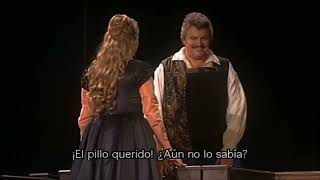
Richard Wagner (1813-1883) was a German Romantic composer, conductor, poet, essayist, playwright, and music theorist; a controversial figure due to his antisemitic ideas and writings, such as " Judaism in Music, " in which he railed against the perceived connection of Jews to music. In his early works, he followed the Romantic tradition; however, he later transformed musical thought with the concept of the " total work of art " (Gesamtkunstwerk). His expertise in philosophy, literature, music, performing arts, painting, and sculpture was channeled into his operas, which he conceived as exponents of this " total art ." Based on these principles, he commissioned the construction of the Bayreuth Festspielhaus to stage his operas, for which he composed the music, libretto, and stage designs.
Opera (from the Latin opera, plural of opus, "work") is a musical genre that combines symphonic music, usually performed by an orchestra, and a dramatic text—expressed in the form of a libretto—sung vocally by singers of varying ranges: primarily soprano, mezzo-soprano, and contralto for women, and tenor, baritone, and bass for men, in addition to children's voices and falsetto voices (castrato, countertenor). The instrumental part typically includes overtures, interludes, and musical accompaniments, while the vocal part can be a chorus, a solo, a duet, a trio, or various combinations, and can take on diverse structures such as recitative or aria.
It should also be noted that within the dramatic musical genre there are various subgenres, such as classical opera, chamber opera, operetta, musicals, singspiel, and zarzuela . Furthermore, as in theater, there is dramatic opera ( opera seria ) and comic opera ( opera buffa ), as well as a hybrid of the two: dramma giocoso . As a multidisciplinary genre, opera brings together music, singing, dance, theater, set design, acting, costumes, makeup, hairstyling, and other artistic disciplines. It is therefore a work of collective creation, essentially originating from a librettist and a composer, and where vocal performers play a primary role, but where musicians and the conductor, dancers, set and costume designers, and many other figures are equally essential. Moreover, it is a social event, and therefore has no purpose without an audience to witness the performance. For this very reason, it has been throughout time a reflection of the various currents of thought, political and philosophical, religious and moral, aesthetic and cultural, typical of the society where the works were produced.
Die Meistersinger von Nürnberg (The Mastersingers of Nuremberg) is an opera in three acts with music and libretto in German by Richard Wagner . It is one of the longest operas, running approximately four and a half hours. It premiered at the Königliches Hof- und National-Theater in Munich on June 21, 1868, conducted by Hans von Bülow . The opera is a tribute to the bourgeoisie of medieval Germany and to Bach 's counterpoint.
The story takes place in Nuremberg in the mid- 16th century . It revolves around the royal guild of Meistersinger (Master Singers), an association of amateur poets and musicians, mostly from the middle class and often master craftsmen in their professions. The Meistersinger developed a craftsman-like approach to music, with an intricate system of rules for song composition and performance. The play derives much of its charm from its realistic portrayal of the era and traditions of the Meistersinger guild. One of the main characters is the poet-shoemaker Hans Sachs (1494–1576), a genuine historical figure and the most famous of the historical Meistersinger guilds.
Today we offer the version presented by The Metropolitan Opera, conducted by the American maestro James Levine .
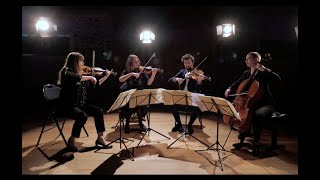
Germaine Tailleferre (1892-1983) was a French composer, the only woman in the celebrated Groupe des Six (along with Georges Auric, Louis Durey, Arthur Honegger, Darius Milhaud, and Francis Poulenc ). Naiveté, freshness, and femininity are qualities associated with Tailleferre from her time with the Groupe des Six ; moreover, some of her work displays a genuine vigor, sometimes tinged with highly sensual harmonies and unexpected austerity. For a long time, Tailleferre 's oeuvre was considered to be limited to a series of piano works composed during the interwar period, and her composing career was thought to have ended with the Second World War . Thus, it was ignored or forgotten that, in addition to these small pieces, she composed much more: chamber works, two piano concertos, three studies for piano and orchestra, a violin concerto, her outstanding Concerto grosso for two pianos, four solo voices, saxophone quartet, and orchestra , four ballets, four operas, two operettas, many mélodies, and that's not counting the numerous works for small ensembles or large orchestras, such as the splendid Concerto for two guitars and orchestra , recently rediscovered and recorded in 2004 in Germany by Chris Bilobram and Christina Altmann . Most of her major works were written between 1945 and her death in 1983. Until very recently, much of her work remained unpublished, and only recently has it become widely known, allowing the composer to begin to be given the recognition she deserves.
Germaine Tailleferre 's Quatuor à cordes is a key work for understanding both his personal style and the French musical spirit of the early 20th century . Written between 1917 and 1919, when he was just over 20 years old, during those years Tailleferre was part of the group Les Six , who sought to move away from late Romanticism and excessive Impressionism, opting instead for a clearer, more direct, and lighter music, influenced by Neoclassicism and, in some cases, by jazz and popular music . Among the quartet's main characteristics, we can highlight a clear and transparent texture without excessive density, a frequent use of short and rhythmic melodies, a modern yet accessible harmony without veering into atonality, a Neoclassical influence with reinterpreted traditional forms, and an optimistic and elegant character, highly representative of Tailleferre . The work shows how a female composer within Les Six developed her own refined and balanced voice, which has special value because it contributes to the visibility of female composers in a period dominated by male figures.
Today we are presented with a performance by Quatuor Métamorphoses , a young and dynamic French string quartet that has distinguished itself on the international scene for its expressive approach, versatility and commitment to a repertoire ranging from classical to contemporary works; a quartet made up of Mathilde Potier – violin, Rachel Sintzel – violin, Jean-Baptiste Souchon – viola and Alice Picaud – cello.
Recommended music videos for all tastes

The Chemical Brothers are a British electronic music duo formed by Tom Rowlands and Ed Simons , active since the 1990s. They are considered pioneers of big beat , a style that blends electronica, powerful breakbeats, psychedelic rock, techno, and house . Their music is characterized by highly energetic rhythms and heavy bass, psychedelic samples (short sound fragments taken from one recording and reused in another), and distorted vocals. They are famous for their live shows, featuring spectacular visuals synchronized with the music.
They are renowned for being one of the few electronic groups to perform in large venues, where giant screens display psychedelic images, strobe lights, and lasers projected onto the audience. They have played at many major festivals, including Glastonbury, Reading, Sónar, Summercase, Creamfields, Optimus Alive, Corona Capital Festival, Corona Capital Guadalajara Festival, and Vive Latino Ibero-American Festival of Musical Culture . In addition to performing their own music, they also regularly DJ sets, mixing tracks by other artists.
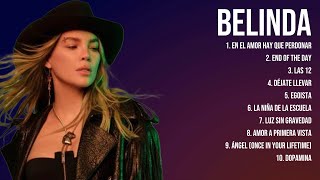
Belinda Peregrín Schüll , known as Belinda , is a Mexican actress and singer, born in Madrid, Spain , on August 15, 1989, who emigrated with her family to Mexico in 1993. Settled in Mexico City , she began her artistic career as a child actress and singer at the age of ten, debuting as the lead in the telenovela Amigos x siempre (2000). In 2002, she signed with BMG and a year later released her debut album, Belinda . During her first decade in the Mexican music scene, she became a prominent figure in Latin pop music and popular culture, with a highly publicized personal life, leading her to be called " the princess of Latin pop ." In 2006, she released her second album, Utopía , and made her film debut with a role in the movie The Cheetah Girls 2 . In 2010, she released her third album, Carpe Diem . In 2012, she released her fourth studio album, Catarsis . With estimated record sales of twelve million, during her time in Latin pop she came to be considered one of its greatest exponents. From 2013 until 2022, she explored other musical styles, such as Mexican cumbia, electronic music, and reggaeton . After a sabbatical year away from music, focusing on other projects, in 2024 she began promoting Indómita , her fifth studio album, which marked a professional resurgence thanks to her foray into corridos tumbados , a genre for which she dubbed herself " Beli Bélica ."
Belinda is also a philanthropist who has contributed to various humanitarian and charitable works. One of the main causes she has supported is the fight against childhood cancer. Throughout her career, Belinda has also demonstrated a strong commitment to environmental causes, establishing the Gaía Planeta Azul Foundation and the Fantasmas Sin Amor Foundation , which is dedicated to protecting the rights and educating abandoned children.

Rammstein is a German industrial metal band founded in 1994 by musicians Till Lindemann, Richard Z. Kruspe, Oliver Riedel, Paul Landers, Christian Lorenz, and Christoph Schneider . Their music is based on a movement that emerged in Germany in the 1990s called Neue Deutsche Härte (New German Hardness) , of which they are the most popular exponent, and which also includes bands like Oomph! and Die Krupps . They themselves have occasionally referred to this blend as Tanzmetall ("dance metal"). Their songs are written almost exclusively in German, although some contain English, French, Russian, or even Spanish; they have sold over 35 million records worldwide. Among other accolades, they have been nominated for two Grammy Awards in the Best Metal Performance category: in 1999 for the song " Du hast " (from the album Sehnsucht ) and in 2006 for " Mein Teil " (from the album Reise, Reise ). They have released a total of eight studio albums and four live albums, as well as five DVDs; their entire discography is available in the catalog of the multinational record label Universal Music .
Their style is generally classified as industrial metal and Neue Deutsche Härte , but also encompasses various metal genres such as heavy metal, progressive metal, industrial rock, alternative metal, groove metal, and electronic music . Musically, Rammstein is heavily influenced by artists such as the Slovenian industrial band Laibach, DAF (Deutsch-Amerikanische Freundschaft), Oomph!, and Ministry . However, the profound differences between songs like "Bestrafe mich," "Ohne dich," and "Te quiero puta!" make it extremely difficult to ascribe Rammstein to a specific movement, although, given their predominantly highly distorted music, they are often associated with the Neue Deutsche Härte movement.

Haifa Wehbe (Arabic: هيفاء وهبي; Mahrouna, March 10, 1972) is one of Lebanon 's most famous singers and is considered a symbol of a mature woman with a youthful appearance thanks to her dedication to maintaining good health and fitness, as well as her striking beauty. Many people see her as a symbol of beauty and femininity, and she is recognized as one of the most beautiful women in the world. Her album, Miss Universe , released by Rotana , reached number one on iTunes on its first day of release. Early in her career, she was interviewed as a phenomenon in Arabic music . She was named the most beautiful woman at the 2009 Arab Music Festival by the Indian magazine Rediff . People magazine has ranked her as one of the most beautiful and well-maintained senior citizens in the world. He participated in the Buddha Bar album through international distributor David Vendetta with his song Yama la yali , which was broadcast on major radio stations in France and England .
Haifa Wehbe is the first Arab solo artist to release her songs online, and she is considered the solo artist who communicates most effectively with her audience through Twitter . Her songs are characterized by their feminine rhythm and blend of Arabic and pop music, which has led to significant sales throughout the Arab world.
Recommended peculiar videos
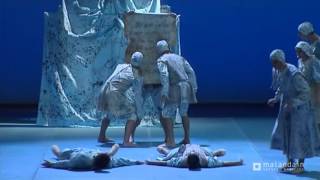
Jules Massenet (1842–1912) was a French Romantic composer best known for his operas, which were very popular during the late 19th and early 20th centuries. Born in Montaud , he moved to Paris with his family when he was eleven so he could study at the Conservatoire , where he was a student of Ambroise Thomas . He won a first prize for piano in 1859 and the Grand Prix de Rome in 1863 for his cantata David Rizzio ; in 1878 he was appointed professor of composition at the Paris Conservatoire . Massenet left behind a largely lyrical oeuvre (twenty-five operas); but he also composed ballets, oratorios and cantatas, orchestral works, and some two hundred songs, in addition to some piano pieces.
The Carillon . The action takes place in Courtrai, Flanders , in the 15th century . Karl the clockmaker and Berta love each other passionately, against the wishes of Pit the baker and Jef the chimney sweep. A herald announces the imminent arrival of the Duke of Burgundy and adds that if he is not greeted with the sounds of the new carillon in the Church of Saint Martin , the clockmaker will be imprisoned. Karl is desperate because he still has a long way to go to finish his work. Alone at night, Karl believes he sees angels ringing the bell, while Pit and Jef climb the bell tower to destroy it. The new day dawns, and the moment the Duke enters, the carillon begins to chime. Those present look up and see Pit and Jef transformed into bell tower figures, striking the bell with their hammers. Berta and Karl fall, embracing each other. (Excerpted from the Malandain Ballet website).
Thierry Malandain , with over eighty works to his credit, has developed a completely personal vision of dance. Closely linked to the concept of "Ballet" as an aesthetic movement, his approach prioritizes the dancing body, celebrating its sensuality and humanity. Leading a group of performers who have mastered the grammar of classical dance but whose expression is contemporary, Thierry Malandain 's career is grounded in profound human values. Through his creations, which can be as serious as they are irreverent, he seeks to develop a style that achieves harmony between the classical and the contemporary, history and the modern world. (Excerpted from the Malandain Ballet website ).

Kathakali is the classical dance-drama of Kerala (an Indian state), based on mythological themes. This video presents the story of Narakasuravadham (The Murder of Narakasura ). The play revolves around the story of Narakasura , a ferocious demon, and Jayantha , the valiant son of Lord Indra (King of the Gods). Nakrathundi , Narakasura 's sister, is attracted to Jayantha and approaches him disguised as Lalitha , a beautiful woman. Jayantha rejects her advances, and the disappointed demon assumes her true form and attacks him. She wounds Jayantha, and a shocked Narakasura vows revenge. The performers today are Margi Vijayakumar (as Lalitha) and Margi Murali (as Nakrathundi).
(Extracted from the video's footnote)

The Morenada is a folk dance from the Andean highlands whose origin is debated. This dance is practiced mainly in Bolivia , as well as in Peru , and in recent years, with Bolivian and Peruvian immigration, in Chile , Argentina , and other countries. The dance dates back to the colonial era and is inspired by the slave trade, in which enslaved people were brought by the Spanish conquistadors to work as laborers in the silver mines of the Viceroyalty of Peru . It was probably initiated by the Aymara people disguised as Black people, portraying characters such as the foreman and the troop of Black people. It originated precisely in the brotherhoods of enslaved people who arrived from Africa and mocked the dances of the white masters.
Today it is offered to us by the National Folkloric Ensemble of Peru .

Philippine dances are characterized by their cultural diversity, with styles varying by region. They are a form of cultural, ritual, and social expression, often associated with festivals and celebrations. Philippine dances frequently incorporate traditional music, colorful costumes, and rhythmic movements, reflecting both indigenous and colonial influences.
Singkil is an ethnic dance from the Philippines that originated with the Maranao people of Lake Lanao , a Muslim ethnolinguistic group in Mindanao . The dance is widely recognized today as the royal dance of a prince and princess who intertwine, clapping to a syncopated rhythm. While the man wields a sword and shield, the woman gracefully twirls a pair of fans. The dance takes its name from the bell-adorned anklets worn by the Maranao princess. A kulintang (traditional musical ensemble) and agung (typical gong) always accompany the dance. Singkil has evolved over time, with significant reinterpretations and changes introduced by the Bayanihan folk dance group, such as the incorporation of elements from the Darangen epic, particularly the episodes involving Prince Bantugan and Princess Gandingan.
Recommended music videos for children






Various Wikipedia articles and relevant information on Artificial Intelligence were used to prepare these texts.
The texts of Videomusicalis are written in Basque, Spanish and English.