

the genocidal terrorism that the State of Israel has
been exercising against the Palestinian People.
Recommended music videos for initiation to classical music


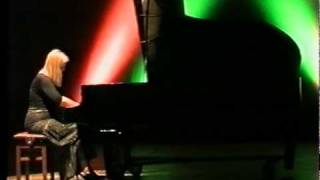
José Antonio Donostia , also known as Aita Donostia ( Father Donostia in Spanish), (1886-1956), was a writer, composer, musicologist, and organist from San Sebastián, Spain. He began his musical studies in 1896 in the town of Lekaroz ( Navarre ). At the age of ten, he entered the Lekaroz Seminary . In 1908, after becoming a priest, he furthered his musical training in Barcelona , and in 1920 and 1921, he perfected his skills in Paris with Eugène Cools . In 1932, he became a member of the Royal Academy of the Basque Language (Euskaltzaindia). As a composer, he produced a wealth of chamber music, organ pieces, numerous choral works, melodies, and piano pieces, which earned him well-deserved renown. As a folklorist, he collected more than a thousand Basque folk songs.
Oñazez (pain), piano prelude no. 6 , “reproduces the melody of a traditional folk song of charming beauty and simplicity in its melody. Its harmonization is novel but appropriate to the line; it presents pianistic difficulties unrelated to traditional virtuosity and, despite finding in it varied stylistic influences, it maintains the personal stamp of the composer and the profile of Basque folklore” ( Taringa ).
Today it is offered to us by Ana Inés Aguirre, professor of piano at the University of San Juan , Argentina .
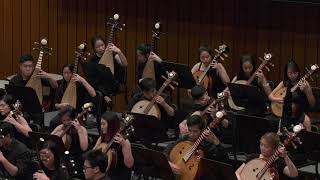
Phoon Yew Tien is one of Singapore 's most influential contemporary music figures. Initially trained as a pianist, she went on to develop a distinguished career as a composer and teacher, with a particular interest in integrating elements of Asian tradition into Western musical language. She studied at internationally renowned institutions and received acclaim for her orchestral, choral, and chamber works. Throughout her career, she actively promoted musical creation in Southeast Asia and championed a distinct cultural identity within contemporary classical music. Her style combines lyrical sensibility, timbral exploration, and a profound awareness of the region's cultural heritage.
The Forge Ahead Overture by composer Phoon Yew Tien emerged within the context of Singapore 's cultural and artistic growth, as the composer sought to consolidate a distinct musical identity that integrated Chinese tradition with Western symphonic language. She conceived the work as an expression of collective dynamism, progress, and confidence in the future. The piece also reflects the influence of the Singaporean orchestral ensembles with which she collaborated for decades and features a distinctly progressive structure, organized through thematic contrasts and dynamic build-ups that reinforce its ceremonial character. From a formal perspective, the overture presents a clearly contrasting tripartite structure: a vigorous and rhythmic Introduction , a more lyrical and expansive central Development , and a brilliant final Recapitulation that returns to the initial motifs. The instrumentation emphasizes the brass and percussion, while the strings and woodwinds provide melodic contrast and timbral balance.
Today it is offered to us by the Victoria Chinese Orchestra conducted by maestro Ng Rui Jun .

Aaron Copland (1900-1990) was a Russian-born American composer of classical and film music. His work was influenced by Impressionism, particularly by Igor Stravinsky . He stands out alongside George Gershwin as one of the most important composers shaping the musical identity of the United States in the 20th century . In the fall of 1917, he began studying harmony and counterpoint with Rubin Goldmark ; at Goldmark's suggestion, he studied piano first with Victor Wittgenstein and, from 1919, with the renowned pedagogue Clarence Adler . In June 1921, he moved to France to study with Nadia Boulanger ; in 1924, he returned to the USA , and the following year he became the first composer to receive a Guggenheim Fellowship , which he renewed in 1926.
Rodeo is a ballet set in the American West , composed by Aaron Copland and choreographed by Agnes de Mille . It premiered in 1942 and consists of five sections. The original ballet was choreographed for the Ballet Russe de Monte-Carlo , a dance company that relocated to the United States during World War II . Among its many accolades, De Mille 's highly evocative choreography was praised, described as having a "cinematic sensibility" and recognized for its realism.
Today we offer the musical fragment of this ballet, Hoe-Down , prepared for a female brass ensemble led by Tine Thing Helseth .

Zequinha de Abreu (1880–1935), a Brazilian composer, instrumentalist, and bandleader born in Santa Rita do Passa Quatro , is the author of "Tico-Tico no Fubá ," one of the most recorded Brazilian songs abroad. A musical child prodigy, he organized his own band at school during primary school. He entered the Seminary in São Paulo (1894), where he studied harmony, but returned to Santa Rita do Passa Quatro (1896) to work in his father's pharmacy. Around this time, he composed his first pieces, such as "Flor da Carretera" and "Bafo de Onza, " and formed a new band (1897), performing shows throughout the interior of São Paulo state. When he presented a choro ( a type of Mexican folk dance) at a city dance, its resounding success among the dancers led him to name it Tico-Tico no Fubá (1917), which would become his most famous composition, popularized in the United States in the 1940s by Carmen Miranda . Returning to São Paulo (1919), he worked as a demonstration pianist for Casa Beethoven , a company specializing in the sale of sheet music and musical instruments. There, he entertained at dance halls and cabarets and played his compositions in the homes of wealthy families, taking the opportunity to sell sheet music. He founded the Banda Zequinha de Abreu (1933) and died two years later in São Paulo .
The song “Tico-Tico no Fubá” is one of the most famous works by the Brazilian composer Zezinha de Abreu (whose real name was José Gomes de Abreu). Composed in 1917, it became one of the most representative pieces of the Brazilian choro genre . The title literally means “ Tico-tico in the cornmeal.” “Tico-tico” is a small bird (the Rufous-collared Sparrow, Zonotrichia capensis), and the image depicts the bird pecking at corn. The music was originally instrumental; the lyrics were added years later, in 1931, by Aloysio de Oliveira . As mentioned, the musical style belongs to the choro genre , a Brazilian instrumental style characterized by a fast and virtuosic rhythm with European influences (polka, waltz) combined with Afro-Brazilian rhythms. The piece is known for its energy, speed, and technical difficulty, especially for pianists and guitarists.
“Tico-Tico no Fubá” achieved worldwide fame in the 1940s, when it was recorded by artists such as Carmen Miranda, Andrews Sisters , and Ethel Smith ; it also appeared in Hollywood films during the golden age, which helped spread Brazilian music in the United States and Europe and is considered one of the most recorded Brazilian songs in history, becoming an international symbol of Brazilian music, along with other genres such as samba and, later , bossa nova.
Recommended classical music videos

Francesca Caccini (1587–after 1641) was an Italian composer, singer, lutenist, music teacher, and poet of the early Baroque period (1600–1750), born in Florence . Her father, Giulio Caccini , was a famous and popular composer, a pioneer of monophonic music; from a young age, he taught her music and composition. Her mother, Lucia Gagnolanti , was a singer; her younger sister, Settimia , also became a composer, and she had an older brother, Pompeo Caccini , who was a singer and painter. She received a humanistic education: Latin, some Greek, as well as modern language and literature and mathematics. She was one of the few female composers of the 17th century whose works were published.
Francesca Caccini 's sacred aria " O che nuovo stupor" features a brief and flexible structure, typical of early Baroque monody . The work is organized through contrasting phrases that alternate moments of tension and repose, avoiding the rigid symmetry of the Renaissance . The vocal line clearly dominates the texture and develops an expressive discourse supported by a restrained basso continuo, whose function is to reinforce the harmony and sustain the emotional character of the text. Formally, the composition progresses following the poetic sense of the words, so the music adopts a design close to ornamented recitative . The rhythm is free and varied, with pauses that intensify the declamation. The melodic ornamentation, expressive intervals, and harmonic changes contribute to creating an atmosphere of wonder and emotional refinement characteristic of the early Baroque . Furthermore, the relationship between text and music demonstrates the Baroque pursuit of immediate emotional persuasion.
Today it is offered to us by the Jerez ensemble El Concierto Ylustrado .

Franz Joseph Haydn (1732-1809), an Austrian composer whose brother Michael Haydn was also a notable composer, was one of the principal figures of the Classical period (1750-1810). At the age of six, he began his studies of harpsichord and violin, and at eight, he was admitted as a chorister to St. Stephen's Cathedral in Vienna , where he continued his musical studies. After his voice changed, he had to support himself by working various jobs while studying composition, analyzing the works of Carl Philipp Emanuel Bach . He maintained a close friendship with Mozart and was Beethoven 's teacher. He laid the foundations for sonata form and the formal structure of the string quartet and the symphony . He died at the age of 77 in Vienna .
Symphony No. 97 in C major, Hoboken I/97, is the fifth of the twelve symphonies known as the London Symphonies (Nos. 93–104) composed by Joseph Haydn . It was completed in 1792 as part of the series of symphonies composed during his first trip to London. Its premiere took place at the Hanover Square Rooms in London on May 3 or 4, 1792. It was first published in England and its popularity spread across the continent in the following years.
Structure . It presents a balanced classical architecture with great formal clarity. The FIRST MOVEMENT adopts sonata form with a slow Introduction (0'00") that creates anticipation before a dynamic Allegro (1'04") based on thematic contrasts and precise modulations. The SECOND MOVEMENT, ADAGIO MA NON TROPPO (8'33"), lyrical in character, develops ornamental variations on a serene theme, highlighting timbral transparency and melodic refinement. The THIRD MOVEMENT, MENUETTO E TRIO. ALLEGRETTO (17'20"), maintains Haydn 's characteristic rhythmic solidity, although it incorporates unexpected accents and dialogues between instrumental sections that add vivacity. The CENTRAL TRIO (18'44") offers a lighter, more pastoral contrast. The FOURTH MOVEMENT, FINALE: PRESTO ASSAI (21'32"), fast and brilliant, employs contrapuntal techniques and motivic repetition that reinforce the overall cohesion of the work. As a whole, the Symphony combines structural symmetry, thematic ingenuity, and expressive balance characteristic of Viennese classicism.
Today's version is presented by the Tanglewood Music Center Orchestra conducted by Latvian maestro Andris Nelsons .

Johannes Brahms (1833-1897), born in Vienna where he spent most of his life, was the most conservative composer of Romanticism , in contrast to the progressive current led by Liszt and Wagner . His music is firmly rooted in the compositional structures and techniques of the Classical masters, and its formal structures faithfully follow Classical patterns, although it incorporates some of the color of Romanticism and popular music. The diligent and highly constructed nature of his works served as a starting point and inspiration for a generation of later composers, as deeply Romantic motifs are embedded within their meticulous structures. An eminently perfectionist, he wrote for piano, chamber ensembles, symphony orchestra, solo voices, and choir. It was Hans von Bülow who coined the term "the three Bs," referring to Bach , Beethoven , and Brahms as the three main pillars of music history .
The Violin Concerto in D major, Op. 77, was composed by Johannes Brahms during the summer of 1878 while he was resting in Pörtschach, Austria . The work arose from his close friendship with violinist Joseph Joachim , who collaborated by revising technical passages and premiered the score in Leipzig in 1879. Although some critics considered it excessively symphonic for a solo concerto, Brahms sought to balance the violin's virtuosity with the orchestral density characteristic of his Romantic musical language.
The composition is structured in three clearly contrasting movements: The FIRST MOVEMENT (0'39"), ALLEGRO NON TROPPO , presents a grand sonata form . The orchestra introduces the main themes before the violin enters, a device inherited from the Classical period but expanded by Brahms with a very dense symphonic treatment. The first theme possesses a noble and expansive character, while the second contributes greater lyricism. The development explores complex modulations and an intense dialogue between soloist and orchestra, preventing the violin from acting solely as a virtuoso instrument. The Cadenza , traditionally performed in Joseph Joachim 's version, serves as an expressive and technical culmination. The SECOND MOVEMENT (24'09"), ADAGIO , adopts a ternary form and is notable for its contemplative atmosphere. The oboe presents the main theme with great melodic simplicity before the violin transforms it through delicate ornamentation and expansive, lyrical phrases. Brahms employs a transparent orchestration that favors timbral balance and emotional depth over virtuosity. The THIRD MOVEMENT (32'15"), ALLEGRO GIOCOSO, MA NON TROPPO VIVACE , combines rondo and sonata forms. Inspired by Hungarian dance rhythms, it possesses a festive and dynamic character. The main theme is energetic and rhythmic, while the intervening episodes introduce lyrical contrasts and thematic variations. The violin displays great technical brilliance through double stops, rapid passages, and vigorous accents, culminating in an exuberant and triumphant finale.
Today we turn to the version by the excellent American violinist Hilary Hahn accompanied by the Frankfurt Radio Symphony Orchestra , conducted by the Estonian maestro Paavo Järvi.

Alban Berg was born in Vienna in 1885 and was one of the most influential composers of the Second Viennese School , along with Arnold Schoenberg. and Anton Webern . From a young age, he showed an interest in literature and music, although he began his musical studies relatively late. His training with Schoenberg proved decisive, as he adopted innovative techniques such as atonality and dodecaphonism , while always retaining a great expressive and lyrical sensitivity. Berg managed to combine musical modernity with an intense emotional charge, especially in his operas Wozzeck and Lulu , considered fundamental works of the 20th century . His music frequently reflects themes such as suffering, love, and human anguish, also influenced by the cultural and political atmosphere of interwar Europe . Despite his artistic prestige, his life was short: he died in Vienna in 1935 from an infection resulting from an insect bite.
The opera Wozzeck narrates the psychological degradation of Private Wozzeck , exploited by the Captain and used as a guinea pig by the Doctor , all while trying to support Marie and their child. Marie 's infidelity with the Drum Major intensifies his hallucinations and his sense of humiliation. Finally, Wozzeck murders Marie by the pond and drowns himself trying to hide the knife, leaving the child abandoned. Alban Berg constructs this tragedy with an expressionistic and atonal style inspired by Büchner . The work is organized into three acts of five scenes each, based on reinterpreted classical musical forms: suite, passacaglia, rondo, invention , and fugue . The orchestra functions as a psychological reflection of the characters through leitmotifs, timbral contrasts, and dense harmonic accumulations that accentuate the dramatic tension and social critique, as well as reinforcing the oppressive and fragmented nature of the entire performance.
Today it is offered to us by the Vienna Philharmonic with the Chorus and soloists of the State Opera, all conducted by the much-missed Italian maestro Claudio Abbado .
Recommended music videos for all tastes

Count Basie (1904-1984) was an American jazz pianist and big band leader. He is one of the most popular jazz musicians in history, associated for nearly fifty years with leading a big band that had a significant influence on certain stylistic aspects of jazz , primarily those related to swing and its more traditional form. From 1927, he worked with various groups until 1935, when he formed his own orchestra. His song "One O'Clock Jump" reached the top of the charts in 1937; from then on, his name as a pianist and big band leader became one of the most well-known in history. He died of pancreatic cancer in 1984.

Nazia Hassan (1965–2000) was a Pakistani singer, songwriter, lawyer, political analyst, and philanthropist. Known as the " Queen of Pop of South Asia ," she is considered one of the most influential musical figures in South Asian history and the subcontinent 's first pop star . From the 1980s onward, as part of the duo Nazia & Zoheb , she and her brother Zoheb Hassan sold over 65 million records worldwide. Born in Karachi, Pakistan , she was raised between Karachi and London , where she studied alongside her brother Zoheb Hassan. There, they were directly influenced by the maestro Suhail Sana , who produced their musical show Saray Dost Hamaray (" Everyone Is Our Friend" ). Years later, on March 22, 2002, he received posthumous recognition for his contributions and achievements from the Government of Pakistan , which awarded him the highest prize for civic achievement and pride in the area of culture, art, and music.

Georges Brassens was born in Sète, Occitanie , France , in 1921 and grew up in humble circumstances where he discovered poetry and folk music. During World War II, he was sent to Germany by the Compulsory Labor Service , an experience that reinforced his nonconformist and libertarian spirit. In the early 1950s, he began singing in small Parisian cabarets and soon stood out for his ironic, sensitive, and morally critical lyrics. His songs, almost always accompanied by guitar, blended humor, tenderness, and literary references. Works such as "La mauvaise réputation" and "Les copains d'abord" made him an essential figure in French chanson . Although he avoided ostentatious fame, he achieved enormous prestige and left a lasting influence before his death in 1981.
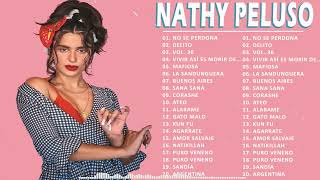
Nathy Peluso was born in 1995 in Luján , Buenos Aires Province, and spent part of her childhood in Spain , the country to which she emigrated with her family. From a young age, she showed an interest in music, dance, and acting, influences that she would later fuse into her own style, a blend of rap, soul, jazz, salsa, and Latin rhythms . She began to gain popularity thanks to songs released online and performances on small stages, standing out for her powerful voice and captivating stage presence. Her career took off internationally with albums like Calambre , a work that received numerous accolades and solidified her artistic image. In addition to her musical talent, Nathy Peluso has become an influential figure in Latin urban music due to her intense, creative, and versatile personality.
Recommended peculiar videos

Pyotr Tchaikovsky (1840-1893) was a Russian composer who graduated from the Saint Petersburg Conservatory and wrote works in various genres, though he achieved his greatest success with his ballets. In 1859, he obtained a civil service position in the Ministry of Justice , which he left after three years to dedicate himself solely to music. His personal life was plagued by continuous crises, beginning with the death of his mother and compounded by his repressed homosexuality, which led him into a marriage that lasted only a few months. He wrote more than 150 compositions, including piano works, quartets, suites, symphonies, concertos, choral pieces, cantatas, operas, and ballets. He died at the age of 53 and is considered one of the greatest composers in history.
The Nutcracker, the work we are watching today, is a fairy tale/ballet usually performed during the Christmas holidays. It premiered at the Mariinsky Theatre in St. Petersburg . But before its premiere, he had already composed an orchestral suite with eight of its numbers. The plot is based on a story by E.T.A. Hoffmann , adapted by Alexandre Dumas ; the story takes place during Christmas when a magician arrives at Clara 's home with a box of puppets and the Nutcracker doll, who is actually a prince. After numerous mishaps, it turns out that it was all a dream of Clara's .
Today we offer the 2019 version of the Russian National Ballet directed by Sergei Radchenko .

Samba is a musical genre with African roots that originated in Brazil , from which a type of dance derives. It is one of the main expressions of Brazilian popular culture and a symbol of national identity. (It should not be confused with Zamba , a completely different musical genre of Argentinian origin). While in some countries the feminine form is used (la samba), in Brazil and in some countries like Argentina and Uruguay , the masculine form is used ( el samba ). It was in the former capital of Brazil where the dance of freed slaves came into contact with other musical genres and incorporated them, acquiring a unique character. In this way, it was Rio de Janeiro samba that achieved the status of a symbol of Brazilian national identity, spreading throughout Brazil and associated with Carnival .
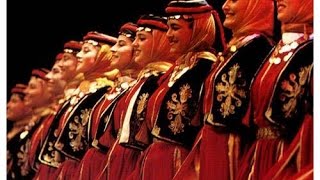
The dances of Turkey reflect centuries of cultural fusion between Asia, Europe , and the Middle East . They originated in villages, religious celebrations, and military ceremonies, evolving with Ottoman and regional influences. Each region developed its own style: in the Black Sea region , fast and energetic movements predominate, while in Central Anatolia, more solemn and coordinated steps are prominent. Many dances are performed in a circle or a line, symbolizing unity and community. Dancers are often accompanied by drums, flutes, and traditional lutes, reinforcing their cultural and festive identity with colorful traditional costumes.
Halay is a traditional Turkish group dance performed at celebrations and popular festivals. The dancers form a line or circle, holding hands or shoulders, while following rhythmic and coordinated movements to the beat of traditional drums and flutes. Their steps combine energy, stamina, and group synchronization, symbolizing unity, joy, and solidarity within the community.

Sambalpur , in Odisha, India , is a region with a distinct cultural identity. The songs, clothing, dances, language, and festivals celebrated in Sambalpur are unique. This distinct cultural identity arises from the strong association of the tribal and folk communities that have coexisted in Sambalpur for centuries.
Sambalpuri dances originated in the Sambalpur region of the Indian state of Odisha as a festive expression of rural and tribal communities. Over the centuries, they became integrated into agricultural celebrations, weddings, and religious rituals, distinguished by their energy and vibrant rhythm. Among the most well-known is Dalkhai , performed primarily by young women during seasonal festivities. These dances are characterized by agile movements, coordinated turns, and the accompaniment of traditional drums such as the dhol and the nishan . The dancers typically wear brightly colored Sambalpuri fabrics with geometric patterns, while the songs tell stories of love, nature, and devotion, thus preserving the region's cultural identity.
Recommended music videos for children





Various Wikipedia articles have been used to write these texts.
The texts of Videomusicalis are written in Basque, Spanish and English.